

- /
How to Price a Home When the Comparable Sales Are Not Truly Comparable.

When none of the recent sales truly matches your home, the answer is not to choose the highest sale, calculate an average, or rely on a price-per-square-foot formula. The better approach is to use the best available evidence to establish a realistic value range, then select a list price that gives the home the strongest opportunity when it enters the market.
Those are two related decisions, but they are not identical. Estimated market value is an informed opinion about what buyers are likely to pay. List price is the number used to introduce the home to those buyers and shape the launch.
That distinction matters most when a property is difficult to compare. In older parts of Northville and Plymouth, for example, homes on the same street can differ considerably in size, condition, garage capacity, lower-level finish, lot characteristics, and proximity to downtown. In Novi, South Lyon, or Brighton, two similarly sized homes may compete differently because of subdivision, age, school boundary, setting, updates, or nearby new construction.
The market ultimately determines what a buyer will pay. The seller controls how thoughtfully the home is positioned before that test begins.
Why are some homes difficult to compare?
A useful comparable is not merely a home that sold nearby. It should appeal to many of the same buyers and provide a reasonable substitute for the subject property.
Fannie Mae's appraisal guidance says comparable sales should share relevant physical and legal characteristics, including site, room count, finished area, style, and condition. It also recognizes that, when few truly comparable homes have sold, the best available sales may still require explanation and market-supported adjustments. The most recent sale is not automatically the best one, either. An older but more similar sale can sometimes be more informative than a newer sale requiring numerous adjustments. (Fannie Mae: Comparable Sales)
That is the situation many sellers face. The nearby sales may be relevant, but none is a clean match.
Common reasons include:
- Few recent sales in the immediate neighborhood
- A distinctive location, lot, view, or setting
- A home that is much older or newer than surrounding properties
- An uncommon floor plan or architectural style
- No garage, an unusually large garage, or a detached garage
- A finished lower level that differs greatly in quality and function
- Major differences in updates, maintenance, or overall presentation
- A mix of city, township, subdivision, and school-boundary influences
The objective is not to find an identical home. It is to determine which available sales best reflect the choices the same buyer would have considered.
Is estimated market value the same as recommended list price?
No. Estimated market value and recommended list price answer different questions.
| Pricing concept | Question it answers | What influences it |
|---|---|---|
| Estimated market value | What is a qualified buyer likely to pay under current conditions? | Closed sales, property differences, market direction, condition, location, and buyer demand |
| Recommended list price | At what price should the home enter the market to create the best opportunity? | Estimated value, current competition, search brackets, seller priorities, timing, presentation, and launch plan |
| Final sale price | What did a buyer and seller ultimately agree to? | Market response, competition, financing, appraisal, inspection, concessions, timing, and negotiation |
A list price can sit within, near, or occasionally below the probable value range when there is a sound reason. That does not automatically mean the seller is giving the home away. It means the asking price is being used to encourage the right buyers to engage.
The opposite is also true. A seller can choose a list price above the supportable range, but that choice does not increase the home's value. It changes how buyers encounter and evaluate the property.
How should imperfect comparable sales be analyzed?
Start by ranking the sales according to how buyers would view them, not by treating every nearby transaction equally.
1. Decide whether the same buyers would have considered both homes
The best question is not, “How close is this sale?” It is, “Would someone shopping for my home realistically have considered this one too?”
A sale from a competing neighborhood may be more useful than a nearby property with a completely different size, age, or lifestyle. Conversely, a home within the same subdivision may be misleading if it has a much better lot, a remodeled interior, and a three-car garage while the subject does not.
2. Separate above-grade living space from finished lower-level space
A finished basement can add meaningful appeal and value, but it is not usually interchangeable with above-grade living area. Quality also varies.
A walkout lower level with full-size windows, a bathroom, and a cohesive finish may influence buyers differently from a basic recreation room. A basement that has painted walls or older finishes may not compete with one that functions as a true extension of the home.
That is why adding all finished square footage together and applying one price per square foot can produce a misleading result.
3. Account for the garage as a functional difference
Garage capacity can materially affect how buyers compare homes in Metro Detroit. The difference between no garage, a one-car garage, a two-car garage, and a three-car garage is not merely the construction cost.
Buyers consider vehicle storage, weather protection, hobbies, equipment, and resale. The effect depends on the neighborhood and price range, so it should be supported by local market behavior rather than a fixed adjustment.
4. Evaluate the lot and exact location
Location is more specific than the city name or ZIP code. Buyers may respond to walkability, traffic, privacy, road position, views, mature trees, lot usability, and proximity to the places important to them.
A desirable location can strengthen a home's position considerably. It does not, however, erase every difference in house size, condition, basement finish, or garage utility. The entire package still has to make sense to the buyer.
5. Compare condition and updates as buyers experience them
Not every improvement returns its cost, and not every older finish requires a dollar-for-dollar deduction. The relevant question is how the market responds to the difference.
Fannie Mae's guidance on comparable adjustments makes the same underlying point: adjustments should reflect market reaction rather than a rule of thumb. (Fannie Mae: Adjustments to Comparable Sales)
An updated kitchen may be important because it removes a project from the buyer's immediate future. A new furnace may reduce uncertainty without producing the same emotional response. Fresh paint may improve presentation more than its cost would suggest. Each feature should be considered in context.
6. Use current competition to test the range
Closed sales show what buyers have paid. Active listings show what buyers can choose today. Pending sales can reveal where buyers are responding, although the contract price is usually unknown until closing.
When the closed sales are imperfect, the current competitive set becomes even more important. If buyers can purchase a larger, updated home with a better garage at the same asking price, the subject needs another compelling reason to win that comparison.
A Northville example: when the higher sales were not equal substitutes
I recently worked through a pricing analysis for an older home near downtown Northville. The location and underlying lot were meaningful strengths, and the home had four bedrooms. Those qualities created real buyer appeal.
The challenge was that the higher-priced nearby sales were not equal substitutes. Several offered more finished living space, genuinely finished lower levels, additional bathrooms, and two-car or larger garages. The subject's kitchen was older, and its basement did not compete as fully finished living space.
It would have been easy to point to the highest sales and say the location should carry the home to a similar number. It would also have been incomplete.
The better analysis was to recognize both sides:
- The downtown-adjacent setting and lot supported buyer interest.
- The home's bedroom count was a strength.
- The superior basements, garages, bathrooms, and finished space in the comparison sales still mattered.
- The list price needed to create exposure and give buyers a reason to act, not simply validate the highest hoped-for value.
That is often the honest answer when the comparable sales are imperfect. A property's strengths deserve weight, but they do not make material differences disappear.
Why does pricing higher not necessarily produce a higher sale?
Because buyers do not begin their analysis with the seller's desired number. They compare the home with the alternatives available within their budget.
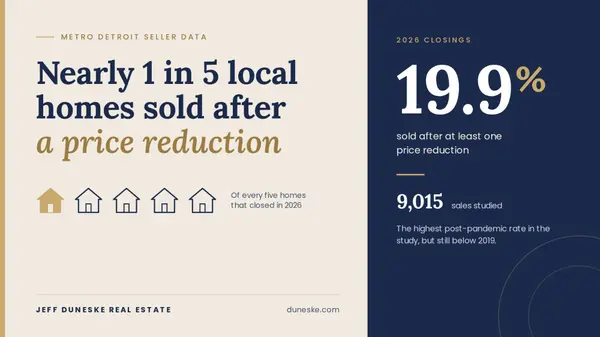
When a listing appears overpriced, many buyers do not make a lower offer. They may assume the seller is not realistic, choose a better-positioned home, or wait to see whether the price changes. The seller then loses part of the attention that comes with a new listing.
A later price reduction can correct the number, but it cannot fully recreate the original launch. By then, some buyers may have purchased something else, and others may view the reduction as a reason to negotiate more aggressively.
This does not mean every home should be priced low. Deliberate underpricing can create its own risks, especially when the buyer pool is small or the seller is not prepared to accept the possible outcomes. The objective is not the lowest price. It is the price most likely to produce strong engagement and a defensible result.
How do buyer search-price brackets affect the launch?
Most buyers search within a range. They may cap a search at $500,000, $600,000, or another threshold based on budget, financing, and comfort.
That means the difference between listing just above or at a major price point can change which buyers see the home. For example, a property at $625,000 will not appear for someone whose maximum is $600,000. A home listed at $600,000 may reach that buyer while also appearing to buyers beginning their search around that level, depending on the platform's filter rules.
Price brackets should never override the evidence, but they should be part of the launch discussion. Zillow's consumer pricing guidance similarly advises sellers to consider the ranges buyers use when searching. (Zillow: How to Price Your Home to Sell)
The strategic question is: At which price will the home be compared with the right alternatives and seen by the most relevant qualified buyers?
Who determines the value: the seller, the agent, or the market?
The agent analyzes the evidence and recommends a strategy. The seller decides the asking price and whether to bring the home to market. Buyers decide whether the opportunity is compelling enough to produce offers.
No agent can force the market to accept a number. A seller can decline an offer, wait, change the price, or decide not to sell. But the absence of an acceptable offer is still information.
That is why I describe pricing as a launch strategy rather than a statement about what the owner or the home is worth. A house can be deeply valuable to the people who have lived there while still needing to compete within a specific financial market.
What should a seller ask before choosing the list price?
Before approving a launch price, ask:
- Which three to five properties would the same buyer have seriously considered?
- What important features do those homes have that mine does not, and vice versa?
- Which differences are supported by buyer behavior rather than a generic adjustment?
- What active listings will buyers compare with mine on launch day?
- Which search-price brackets will include or exclude the property?
- What is the honest probable-value range?
- What is the plan if early showings, feedback, and offers do not support the price?
A strong pricing recommendation should answer those questions clearly. You should understand the reasoning even if you ultimately choose a different number.
The goal is not a perfect estimate. It is a well-supported decision.
When the comparable sales are imperfect, false precision is not helpful. A narrow estimate built on weak assumptions can create more confidence than the evidence deserves.
The more responsible approach is to establish a supportable range, explain which sales deserve the most weight, identify the home's strengths and limitations, and select a launch price consistent with the seller's priorities.
If your Metro Detroit home is difficult to compare, I can prepare a pricing and positioning review that shows the evidence, the current competition, and the tradeoffs behind the recommendation. You will receive a clear strategy without pressure to list.
Call or text me at (248) 939-9393, email Jeff@Duneske.com, or request a custom home-value review through duneske.com.
No pressure. Just clarity.
Categories
- All Blogs (187)
- Best Agent For… Blog Series - Northville, Novi, South Lyon & Metro Detroit (41)
- Brighton Real Estate Market Updates (3)
- Buyers (23)
- Community & Local Events (2)
- Divorce Real Estate (11)
- Estate Planning & Strategy (7)
- Golf Course & Luxury Living (6)
- Green Oak Real Estate Market Updates (2)
- Homeowners (Maintenance & Equity) (2)
- Investors (1)
- Market Conditions (12)
- Metro Detroit Real Estate Updates (33)
- Mortgage & Financing (2)
- New Construction (3)
- Northville Real Estate Market Updates (14)
- Novi Real Estate Market Updates (17)
- Pricing & Home Values (7)
- Relocation & Moving (7)
- Rightsizing & Senior Moves (10)
- Seller Success Stories (11)
- Sellers (62)
- South Lyon Real Estate Market Updates (17)
- Tips, Guides & How-To (11)
Recent Posts


GET MORE INFORMATION